
BitcoinWorld
Nasdaq Slides More Than 1% in Broad Market Selloff; Dow Falls Over 1.6%
U.S. stocks extended their losses on Tuesday, with the Nasdaq Composite falling more than 1% during intraday trading as a broad-based selloff swept across major indices. The decline reflects growing investor caution amid renewed economic uncertainty and sector-specific pressures.
Broad Market Decline Deepens
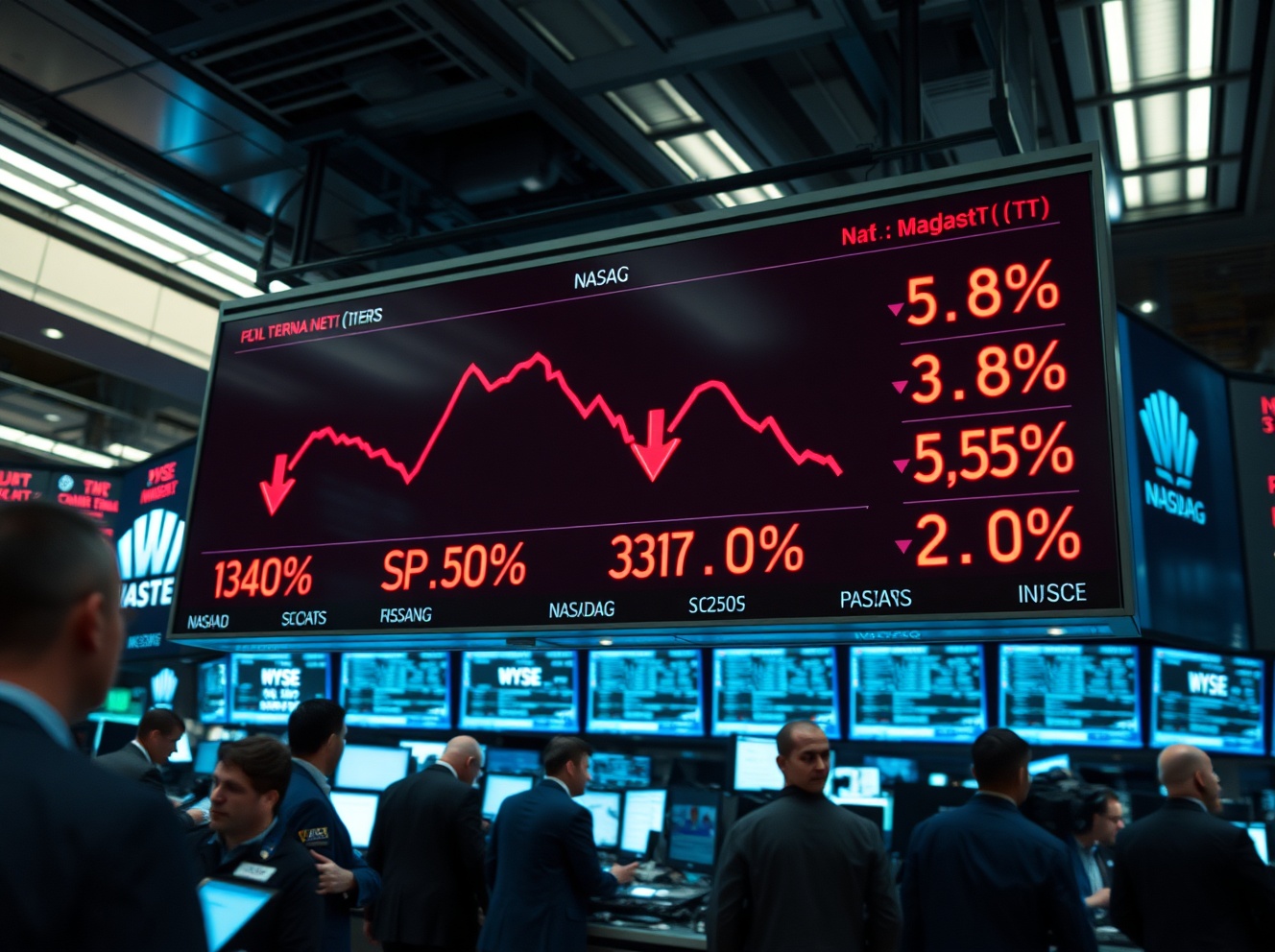
The Nasdaq’s intraday drop widened to 1.35%, leading the losses among the three major U.S. stock benchmarks. The S&P 500 fell 1.00%, while the Dow Jones Industrial Average declined 1.66%, marking the steepest percentage drop of the session. The moves erased gains from earlier in the week and pushed several indices closer to their recent trading ranges.
The selloff was broad, with decliners outpacing advancers across the New York Stock Exchange and the Nasdaq. Technology shares, which have a heavy weighting in the Nasdaq, were among the hardest hit, as investors rotated out of growth-oriented names amid concerns over elevated valuations and interest rate sensitivity.
Context and Market Implications
The decline comes at a time when markets are grappling with mixed signals on inflation, consumer spending, and corporate earnings. Recent economic data has shown resilience in the labor market but persistent price pressures, leaving the Federal Reserve with limited room to ease monetary policy. Higher-for-longer interest rates continue to weigh on growth stocks, particularly in the tech sector.
Tuesday’s move also reflects broader risk-off sentiment, with investors seeking refuge in defensive sectors and fixed-income assets. The yield on the 10-year U.S. Treasury note edged lower during the session, signaling a flight to safety.
What This Means for Investors
For retail and institutional investors alike, the intraday decline underscores the importance of diversification and risk management. While single-session moves of this magnitude are not uncommon, they can signal shifts in market sentiment that may persist over the short to medium term. Analysts are watching for further volatility as earnings season progresses and as the Fed’s next policy meeting approaches.
The Nasdaq’s decline also highlights the vulnerability of high-growth sectors to changes in interest rate expectations. Investors should monitor upcoming economic reports, including consumer price index data and jobless claims, for clues on the Fed’s next move.
Conclusion
Tuesday’s broad market selloff, led by a 1.35% drop in the Nasdaq, reflects a cautious turn in investor sentiment driven by economic uncertainty and sector-specific headwinds. With the Dow and S&P 500 also posting significant losses, the session serves as a reminder of the market’s sensitivity to macroeconomic factors. As always, investors are advised to focus on long-term fundamentals rather than short-term volatility.
FAQs
Q1: What caused the Nasdaq to fall more than 1%?A1: The decline was driven by a broad selloff in technology stocks, renewed concerns over interest rates, and cautious investor sentiment amid mixed economic data.
Q2: How did the S&P 500 and Dow Jones perform?A2: The S&P 500 fell 1.00%, while the Dow Jones Industrial Average dropped 1.66%, making it the worst-performing major index of the session.
Q3: Should investors be worried about this decline?A3: Single-session declines are normal in volatile markets. Investors should focus on long-term strategies and monitor upcoming economic data and Fed policy signals rather than reacting to short-term movements.
This post Nasdaq Slides More Than 1% in Broad Market Selloff; Dow Falls Over 1.6% first appeared on BitcoinWorld.
